
What Is Magnitude in Physics? A Clear Explanation
In physics, magnitude is a measure of the size or strength of any physical quantity, but is concerned only with how much, and not with the direction. It cuts down on the complexity to bring out the basic size of such phenomena as speed, force or energy so that it is fundamental in the comparison of apples to oranges in the field of science.
Magnitude in Everyday Terms
Consider magnitude as the figure on a speedometer, 60 miles per hour, distance divided by time, whether you are going north or south. Earthquake magnitudes measure the intensity of shaking and a 7.0 is much more powerful than a 5.0. It is the standard of the world that brings the vectors to their quantitative nature.
Scalars: Magnitude-Only Quantities
Scale quantities are quantities of magnitude. Mass weighs 5 kilograms, heavy or light I know not till then. Temperature reaches 25 degrees Celsius; time passes 10 seconds. The battery has a reading of 100 joules of energy. No arrows were required–they are solitary, plain and straight.
Vectors: Magnitude Meets Direction
Magnitude is coupled with which way by vectors. Coverage 10 meters to the east; velocity 20 meters per second north. Force pushes 50 newtons upward. The size of the extractor takes the scalar heart: the size of this force remains 50 newtons, independent of the angle. Direction adds the entire narrative to the vector.
Magnitude Across Physics Branches

Motion: Speed (scalar) clocks pure rate; the magnitude of velocity is the same as the speed, but it is a vector quantity pointing along the paths. The magnitude of acceleration indicates the rate of change of speed.
Forces Net force magnitude either gives the strength of push or pull; balanced forces strike zero magnitude to rest.
Waves: The height of the peaks- bigger sounds, higher waves have larger magnitudes.
Fields: The strength of the pull of gravity or the strength of the electric field is expressed using the term magnitude at a point.
Earthquakes: Richter scale records magnitude- every unit increase in magnitude increases energy release by a huge margin.
Why Magnitude Matters Practically
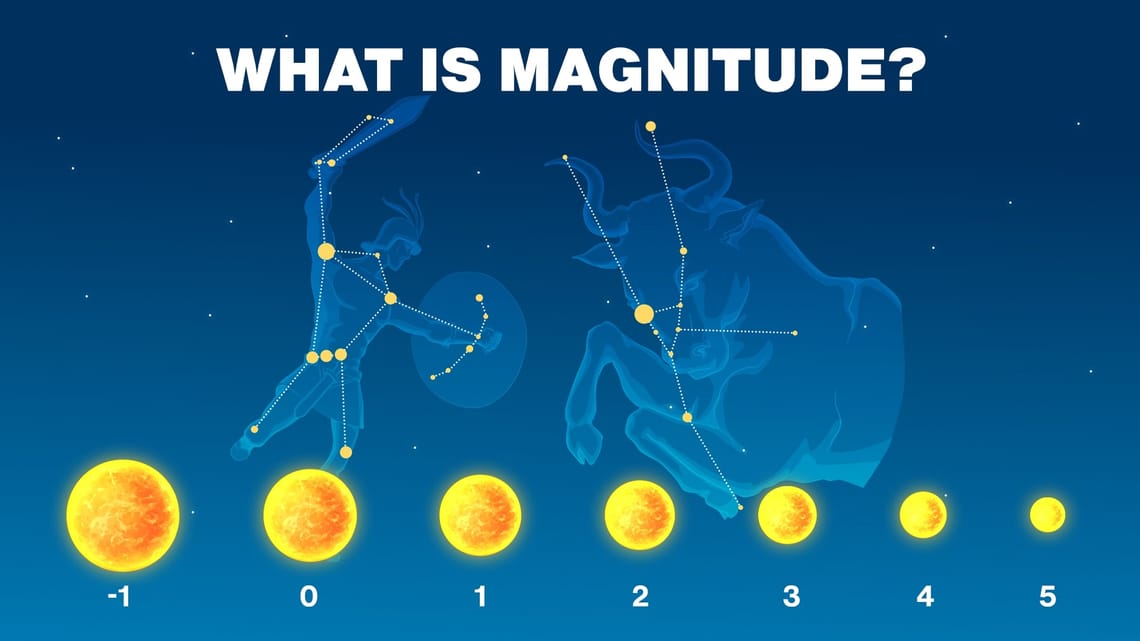
The amount of forces against the bridge is determined by engineers to prevent the bridge against the power of the wind or quake. The astronomers categorize the stars based on their brightness- the darker the star, the higher the number of the star. Sound engineers mix magnitudes decibel of concert balance. Heart health indicators are read by doctors of blood pressure magnitudes (120 over 80). It measures the reality objectively.
Measurement and Scales
Length, force, frequency, etc. Magnitudes are matched with units meters, newtons, hertz. Logarithmic scales squeeze ends, decibels convert huge ranges of sound to small numbers; star magnitudes reverse to bright to small. Accuracy counts: 9.8 roughness of beats 10.
Real-World Examples in Action
The 100 horsepower engine of a car has power magnitude. The tsunami waves reached magnitudes of 30 meters in the offshore. The vibrations of smartphones provide very small levels of acceleration to your hand. The magnitude of stock market price fluctuations is an informal term that uses physics terminology.
Common Pitfalls to Avoid
Magnitude is direction insensitive – do not confuse speed (scalar magnitude) and velocity. Not add: vector magnitudes add not arithmetically, but geometrically. Log scales are deceptive to beginners; an increment of one does not increase the score by a factor of two, but exponentially.
Physics is based on numbers size before story Magnitude. Scalars make things simple, vectors make worlds. It measures what moves us, literally, since it is the shaking in the earth that causes the cities to shake, and the engines that move the cars.